Join us February 1 at the SPARC monthly meeting for a presentation on ham satellite communications. Drew, KO4MA, AMSAT Vice-President Operations and Member of the Board will present and if conditions are right may be able to demonstrate a satellite QSO.
AMSAT is a worldwide group of Amateur Radio Operators who share an active interest in building, launching and then communicating with each other through non-commercial Amateur Radio satellites.
The Radio Amateur Satellite Corporation (AMSAT) was formed in 1969 as a not-for-profit educational organization. Its aim is to foster Amateur Radio’s participation in space research and communication.
One of the first Field Days I ever attended (back in 1982) was at the Fairgrounds in Largo (home of the Renaissance festivals). At that event, the Clearwater Amateur Radio Society (CARS), the Metro Repeater Association (Metro) and the St. Petersburg Amateur Radio Club (SPARC) came together in the spirit of inter-club cooperation to put on a huge ARRL Field Day effort. This was complete with a great location, good equipment, operators to man the stations, great food and loads of fun.
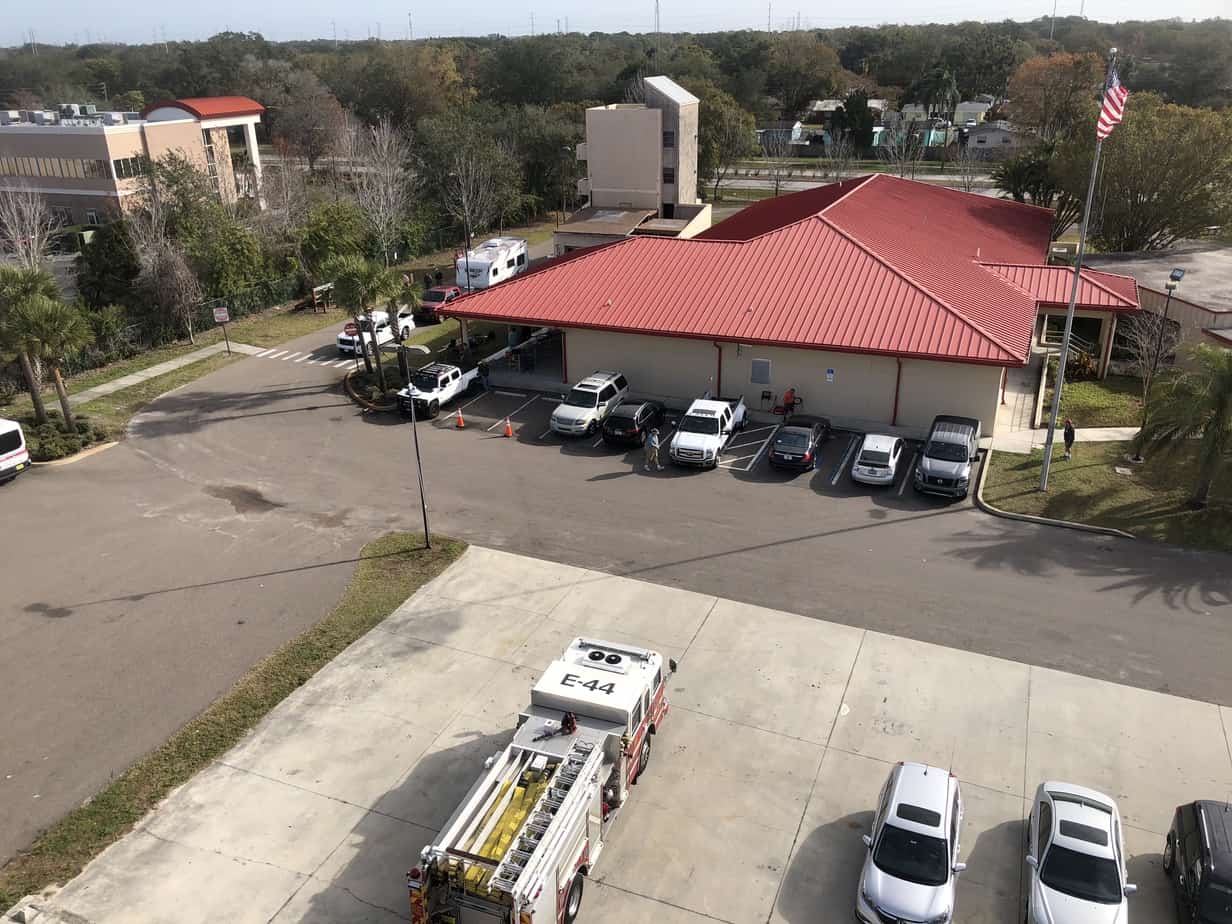
View of site from fire tower (dipole support) [Photo by Josh KN4GFP]Folks gathering ready to setup [Photo by Josh KN4GFP]In that spirit, last week in Clearwater at the Clearwater Fire Training Center located off of Belcher Road, members of CARS and SPARC joined the members of the Upper Pinellas Amateur Radio Club (UPARC) to put an effort in for Winter Field Day. Yes, I said Winter Field Day. Winter Field Day was started several years ago to practice the same emergency communications abilities at Summer Field Day but with the understanding that not all emergency deployments occur in the late days of June. While WFD is not an ARRL event, it follows the same general idea. Go to a remote location away from existing radio infrastructure, use generators and see how many other hams you can contact in a 24 hour period. Our joint Winter Field Day was a huge, resounding success!
Three HF stations setup outside [Photo by Bob N2ESP]With three separate stations, we made 430 QSOs for a point total of over 13,000 (including 6000 bonus points). More importantly, we aptly demonstrated what can happen when three of the larger clubs in the area work together to conduct an event to support each of their members and the hams in Pinellas County in general. Of course, an event like this does not “just happen”.
Elmering on how to operate the stations…[Photo by Jeff NE4C]Representatives of the three clubs met for weeks before the event planning all the little details. We staged a “dry-run” where all the radio and computer equipment was setup and made operational. We call this thing we hams do wireless, but being short a few key cables can mean the difference between talking or not.
Roger KL7HOT and Alan N4AYE enjoying the Breakfast of Champions [Photo by Josh KN4GFP]Setup for the event started at 8:30 AM on Saturday morning, January 27. Approximately 20 people were present at the start to setup two wire antennas including stringing them from the fire training center towers used to train firefighters on high rise building fires.
Dipole support from fire tower [Photo by Jeff NE4C]
An additional vertical was setup as were three separate HF station locations and supporting computers.
Tom NY4I working PSK31 [Photo by Bob N2ESP]Generators for emergency power were setup as was a VHF talk-in station and a satellite antenna and tripod. Everything was set up by Noon and ready to go just in time for the first of four meals our wonderful cooking team provided. Lunch of hamburgers and hotdogs was served.
Glenn N4ESU and Steve N4FOY work 40m SSB [Photo by Bob N2ESP]
At 2:00 PM, the HF stations leap into gear making contacts with stations all around the country. Very poor HF propagation made it slow going limiting most contacts to 20m and 40m with mostly East coast and Mid-west stations responding.
Working the East Coast on Saturday [Photo by Tom NY4I]
Around 6:00 PM, it was time for dinner of pulled pork, side dishes brought for the potluck and desserts.
Good food, good fun [Photo by Tom NY4I]Hams eating ham [Photo by Jeff NE4C]Meal time [Photo by Tom NY4I]The contacts continued throughout the evening.
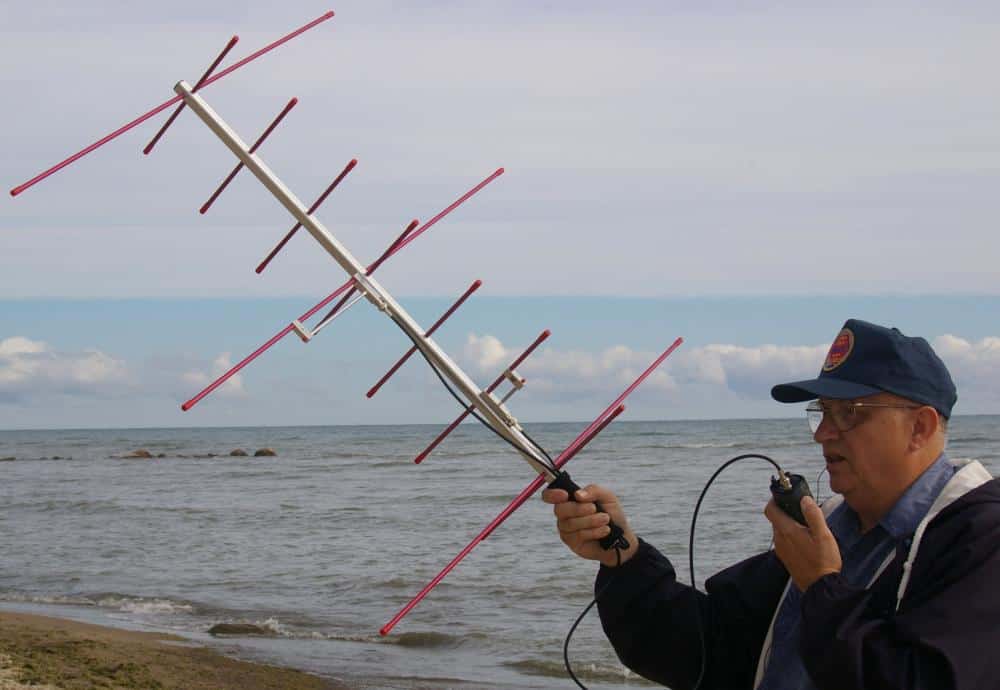
Several times during the day, a satellite contact was attempted using an Arrow antenna, a Yaesu FT-817 radio and a satellite tracking program on an iPhone.
Arrow Satellite Antenna [Photo by Bob N2ESP]After 5 unsuccessful passes (including a try at 2:00 AM Sunday morning), Tom NY4I made a mad dash after getting a few hours of sleep at home to pull into the site while an FO-29 pass was just starting. Everyone came together to bring the antenna to an open spot in the parking lot while Tom gathered up the FT-817. Then, when the satellite was at its highest point of that pass, NK1N from Hillsborough, NJ responded to our call for a successful contact at 8:20 AM.
Having our 1500 satellite bonus points in the bag, we settled into finish up making more contacts followed by a lunch of leftovers (pulled pork gets better with time). It looked like a storm was moving in around Noon so the decision was made to start taking down some antennas that were not used. The final station stopped at 12:30 PM and the antennas high on the fire towers were removed. The team proceeded to start dismantling the equipment, antennas, computers and other items. As usual, the site came down much faster than it went up. At the end, while waiting to help load some items, a bunch of us hung around just chatting and enjoying the camaraderie of the day. It was an incredibly fun time all weekend and if you missed it, I do hope you plan on attending next year.
Equipment waiting to be loaded into a vehicle. Looks like a DXPedition, doesn’t it? [Photo by Tom NY4I]As we pulled out of the site right at 2:00 PM, the aforementioned rain started to fall proving the decision to tear down early ever more prescience.
Below is an image browser of all the pictures I have been sent. Please feel free to browse. If you have any pictures I am missing, please send them to webmaster@sparc-club.org.
Not a bad place to spend a Saturday…
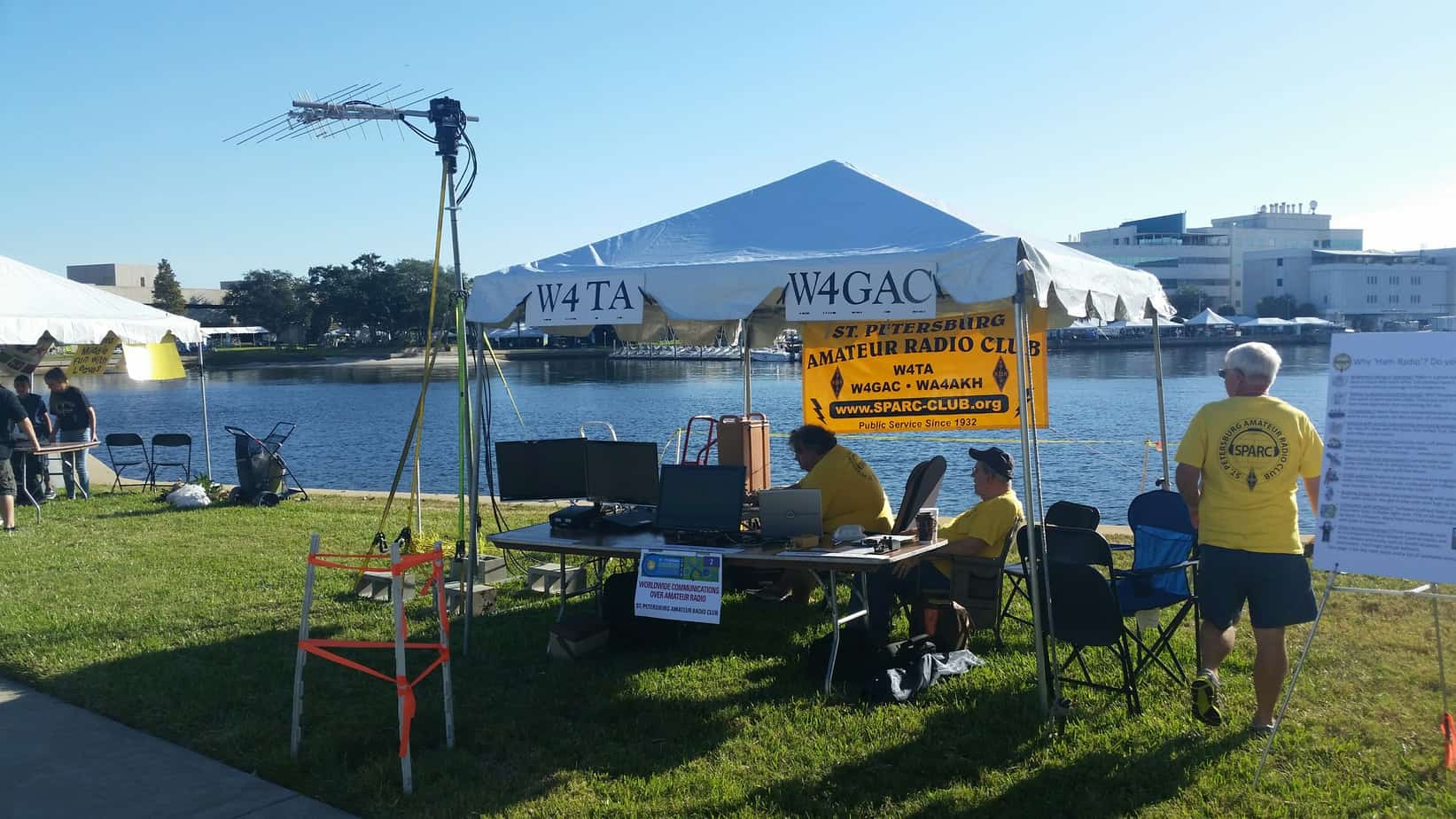
The weather was perfect with a cooling breeze blowing over our waterfront venue. The 20M vertical and VHF/UHF Yagi antennas rose above the tent that provided us shade from the Florida sun. Signage identified our mission as strange sounds emanated from the radios we had set up. This was the scene at the SPARC booth as the 2015 St. Petersburg Science Festival got underway.
Tom, NY4I was searching for satellites to work aided by the custom antenna base/mast assembly designed and built by John, KI4UIP. Two large computer screens showed our visitors the available satellites and radio/antenna operations. Dave, KR4U demonstrated how hams could “text” over the radio using PSK31 as he made contacts around the country. Dee, N4GD and Bob, N2ESP had the best job, teaching our young visitors to tap out their names in Morse code on our code practice oscillators.
Thanks to Leslie, WA4EEZ and Roger, K4SHI who loaned us their PSK/SSB station and Felax, KI4TWQ assisted us getting our station ready for the big show, and Clayton, KJ4RUS who provided our graphics. SPARC members dropping by the booth included Kyle, N4NSS and Coy, KK4JMP.
As you may have read on this site, SPARC is setting up a display at the St. Pete Science Festival. This is the first year I have been in town to attend so I thought it would be a “cool” display to go “whole-hog” with the satellite demonstrations. One of the things that first drew me to amateur satellites was, believe it or not, the rotor turning automatically. I visited a ham in Salt Lake City and he had two beams (2m and 440) on a common boom and they were not only moving in the horizontal plane, but also vertical. Being a software person but also a ham, I always loved whenever software controlled hardware. I always thought it was a great integration of computers and radios to automatically track the antenna. Some of you know at Field Days past, we have used my single 2m/440 beam with a simple azimuth rotor to track the satellites. Well, this year at the science festival, we are going a bit bolder.
The setup will be a Yaesu G5500 Azimuth/elevation rotor so the antennas will move in both planes. I have also separated the antennas so we will have one circularly-polarized (CP) 2m beam and one CP 440 beam. This should make for a very cool display with the antenna tracking things throughout the day. I will make sure there is always a satellite we are tracking. When we do have a pass, we will be making attempts to contact other hams on a satellite.
If you are interested in satellites, I highly recommend you come out and help. This should be a great experience to introduce others to the joy we all have received through amateur radio. I owe what some would call a very successful career to my early interest in amateur radio. If you have young teenagers or grandchildren of the same age, you cannot go wrong introducing them to the technical side of our hobby.
I should also mention that AMSAT had a successful launch today of their Fox1A satellite. If all goes well with the initial checkout, there will be an FM satellite available again. I have made many contacts on the old AO-51 and AO-27 from my dual-band radio while mobile. You really do not need much to work them particularly on the higher elevation passes (like right over your head). More information on working these “easysats” is available here.