The station crew invites you to stop by the station on Saturday August 29 at 10:00AM to help reorganize (read clean) the station and storage areas. We will break for lunch and then convene the SPARC Executive Board meeting at 2:00PM. All are welcome.
On Friday, June 12, four of us met down at the station for lunch and then to work on the K3. The K3 that the club uses is a radio that was used in the WRTC-2014 contest held in New England last summer. As contest radios don’t really need a second receiver or a digital voice recorder (DVR), this K3 was not fitted with these options. As we also like to DX with the radios at SPARC, NY4I procured the parts for the radio to add the second receiver, upgrade to the new K3SYNA synthesizer and add the Digital Voice Recorder (SSB and CW memories).
Adding this kit took about 4 hours using the very well written Elecraft instruction manual. Dave KR4U led the build team with assistance from Tom, NY4I, John KI4UIP and Club President, Bob, N2ESP. We had the radio buttoned up but not tested plus Tom forgot to add the DVR so after taking the radio home for final testing, NY4I ended up taking the sub receiver out two more times to get it to work (I gave Dave some bad instructions on the order of filters). After the source of the issue was located, and a quick test on the trusty HP service monitor, it was time to tackle the DVR. This required removing the front panel of the radio and removing a board. The unfortunate thing is this was the exact same procedure that was used to add part of the second receiver. The moral of the story is when installing two kits at once, make sure you read both sets of instruction FIRST!
After about 2 hours (being extra careful), Tom, NY4I installed the DVR and all checked out well.
You might be asking how this helps the general club member. Besides this being one of the K3s we are using at Field Day, you now have access to world-class radio complete with a fully-independent sub-receiver and DVR. This makes DXing easier as you can also hear the other side of the pile-up. The DVR means you can record your voice and push a button to give your call in a contest. This is also the radio we use in the remote HF station available to SPARC members.
Our hope is that members want to get on the air and operate the station. We normally open the station the Saturday after the club meeting plus for contests. Other times are available—just ask someone. If you haven’t been down to the club station lately, make a point to come down during Field Day and see the setup. If you are a seasoned HF operator or a new general class ham looking to learn, we can help you use the station however you like. It is there to be used and the more the merrier.
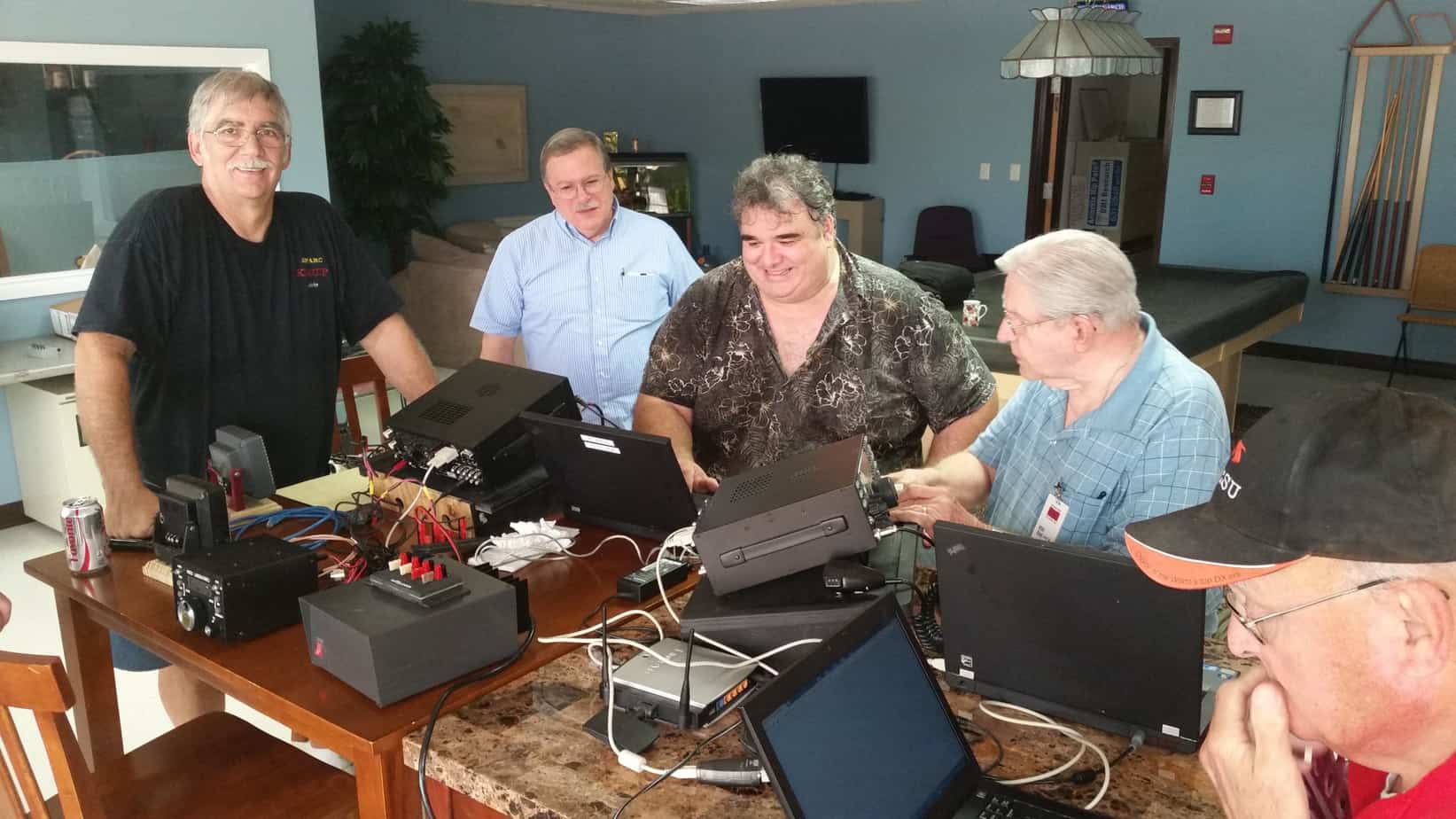
Field Day preparation by the Antenna, Radio and Computer teams took place on Saturday. In the photo below, John, KI4UIP, Hal, W1EES; Tom, NY4I; Dave, KR4U and Johnnie, W4TSP work on two HF radios.
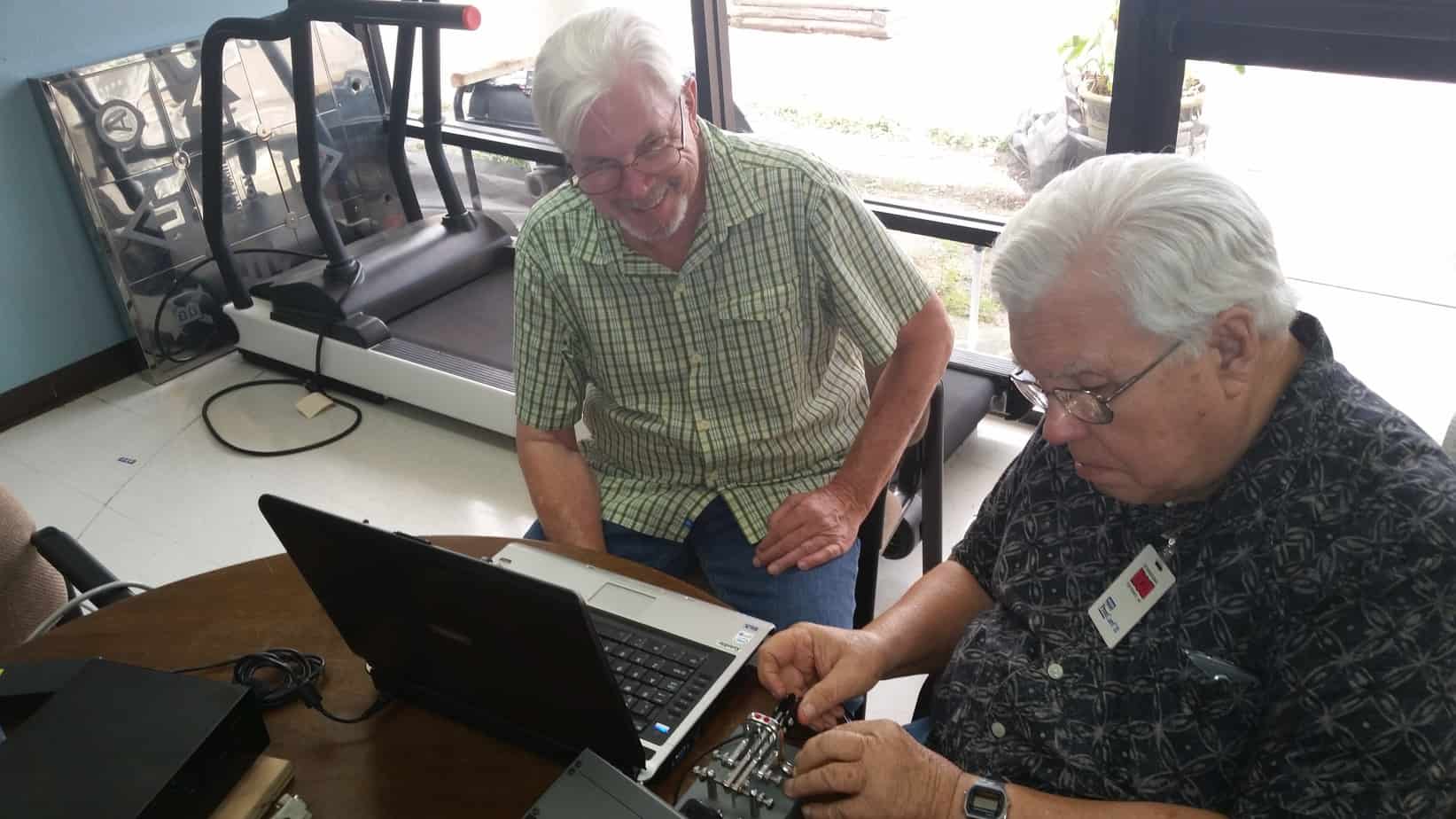
Below, the CW station gets tweaked by Tom, W4CU and Ron, KP2N.
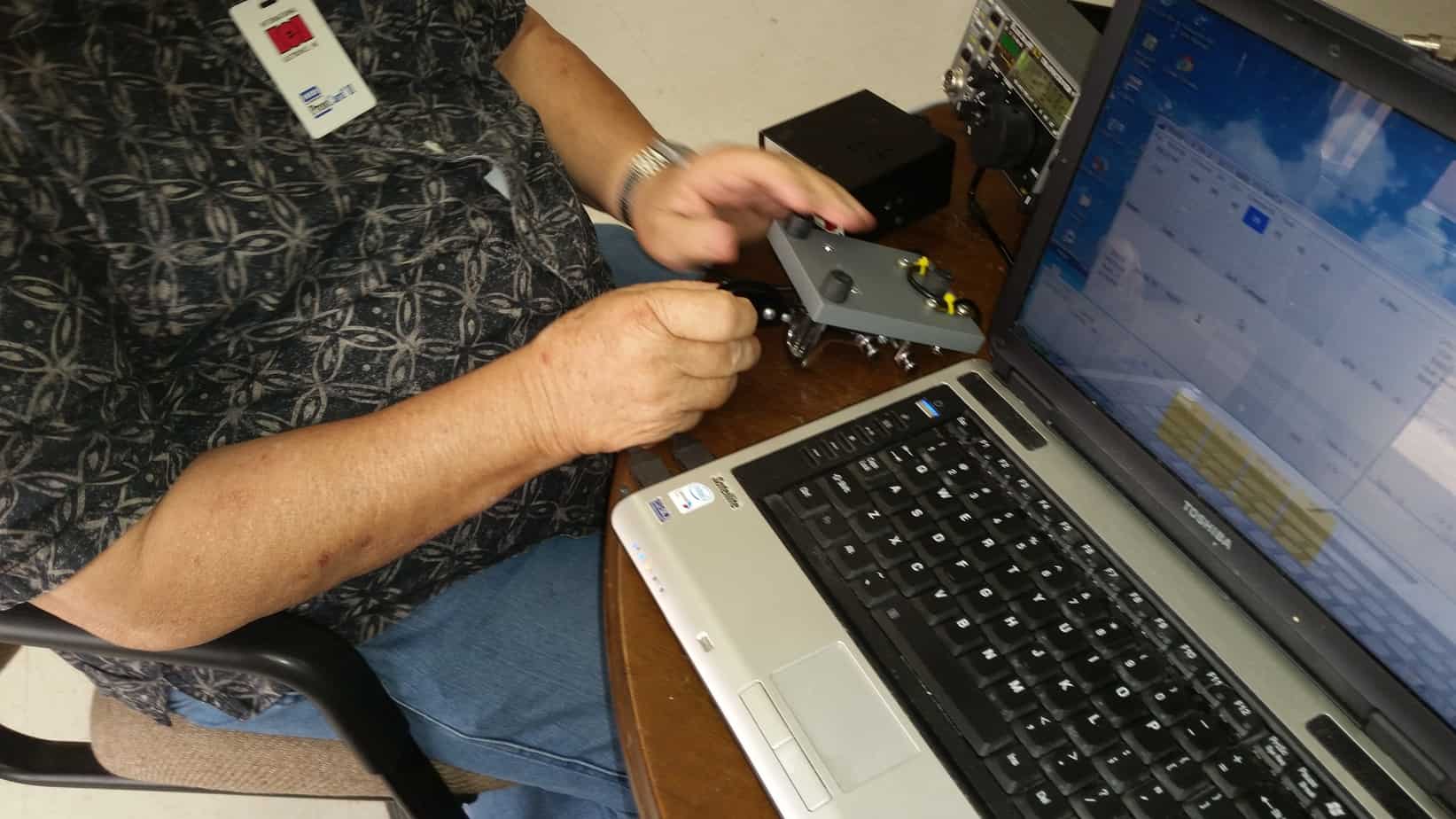
Below, Ron has identified a problem with the CW configuration.
We will be setting up antennas on Friday, June 26 at 10:00 AM. All help is appreciated. Field Day setup will begin at 9:00AM on Saturday, June 27th. Lunch for those arriving early and setting up the station will be around noon. The fun begins at 2:00PM.
Don’t forget to bring an appetizer, side dish or dessert and your headphones.
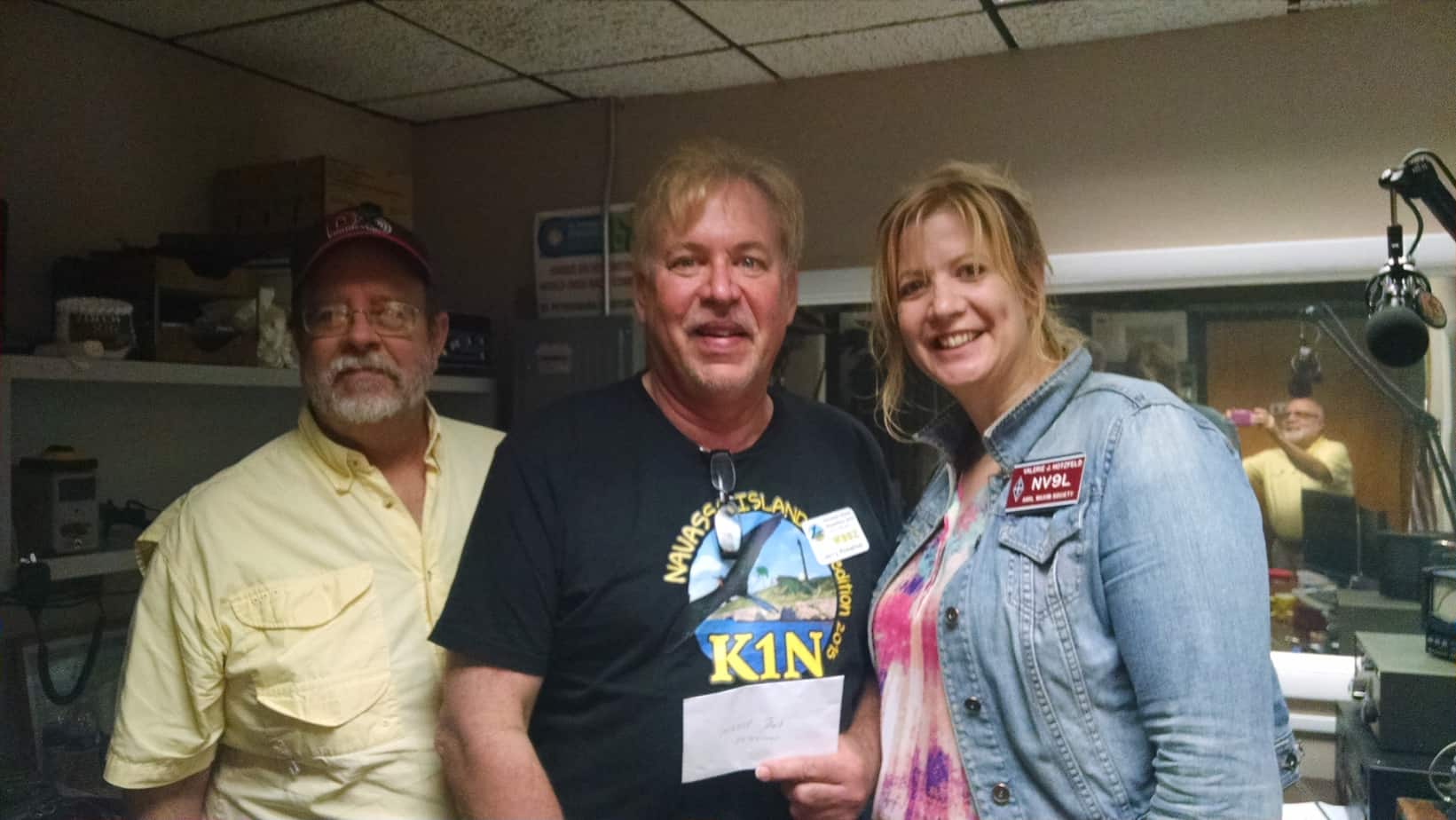
A few SPARC members has the pleasure of visiting with Jerry, WB9Z and Valerie NV9L over breakfast recently. Jerry has been on numerous DXpeditions, while his fiancée Valerie is a host on the ham radio webcast “Ham Nation.”
L to R: Bob, N2ESP; Jerry, WB9Z and Valerie, NV9L
After a filling breakfast, we took our visitors on a tour of W4GAC. There we presented Jerry with a donation from SPARC for the K1N Navassa DXpedition. Jerry was one of the many operators that put this rare entity on the air.
The SPARC Logo appears on the K1N Sponsors page as seen below.
Under the watchful eye of our station trustee, Dave, KR4U, some work occurred this weekend at the SPARC Club Station to support the Remote Station project, On Friday, station engineer John, KI4UIP and Don N4KII ran the rotor line and LAN drop from side one of the room over to the remote side (closest to the window). This allows the main network switch to go to the side that needs more LAN drops. Having the rotor cable allows the Green Heron RT-21 computer-controlled rotor interface to be next to the K3.
On Saturday, after the SPARC board meeting. John and Tom, NY4I worked on installing some more equipment. First was a plywood backing John fabricated to add to the wall under the table. This was to mount some equipment to allow remote control of the devices in the radio room.
First, we added the new LAN switch (8 port GigE with CAT7 shielded cabled to minimize RF interference).
Then, a Lantronix 4 port Ethernet to Serial server. This device allows someone to map a serial port from a PC across the Internet to control one of 4 serial devices. We have 3 devices that require serial control: Alpha 9500 amplifier, Green Heron Rotor Controller and the Elecraft W2 wattmeter. By having these devices available to the network, a remote user from home can monitor the power out of the station as well as turn the rotor with their local Logging program (like HRD, DXLabs, N1MM or WriteLog). Your local software just thinks it is talking to a local serial port, but in reality,the data is routed across the Internet to the device at the SPARC station. A great by-product of this is that the local computers can also talk to the serial devices over the network. This allows either station A or station B to control the rotor for example without having to run a 2nd serial cable across the room and switch them with an A/B switch.
The last item installed was a DLI Web Connected Power Switch. This device has 8 LAN controlled ports to allow switching and resetting of devices remotely. Say we are operating remotely and the Rotor controller stops responding. If necessary, we can issue a command that will turn the rotor controller’s power off and then turn it back on. This allows the advice to reset.The web power switch is also smart enough to ping any of the devices plugged into and if they stop responding, it cycles the power port to reset the device.
A goal of this system is to make sure that the station can be used locally for contesting operations and when people want to come in and operate. It’s secondary function is to operate remotely. The way this has been engineered is to make sure that both goals are supported without having to switch anything.
Tom stayed later to tie up a few loose ends including updating the firmware on the Alpha 9500 to version 3.03. This drastically improves the auto-tune algorithm. The amp is even easier to operate now. He also connected the serial interface from the K3 into he RemoteRig box so it is accessible both remotely and for local computer control via WriteLog.
The next thing to install is some beefier coax jumpers to replace a few pieces of RG-8X. These will be replaced with LMR-400 UltraFlex. The last major item before we start full remote integration testing is to add a automatic band decoder to allow the K3 to drive the selection of the antennas. This will make local operation too in that no manual switching of the antennas will be required. In the remote operation, this is really a requirement as we need to switch the antennas between the Log Periodic and the dipole.